Funnels
9 min read
The Anatomy of a B2B Video Sales Letter
A B2B VSL isn't a scriptwriting exercise. It's sales-call architecture. Here's the 11-section structure, built from your own call transcripts, that pre-sells the offer before the prospect ever books.

Today you’ll get a structure — not a script. It fits on one page, the mental model fits in one sentence, and once you have it, every video you record (VSL, YouTube, sales walkthrough) has a shape.
Throughout this article, VSL is short for video sales letter.
The One Mental Model
A B2B VSL is a sales call without the other person present.
That sentence is the whole thing. If your sales calls convert, your VSL should be built from them — not from a blank page, not from a swipe file, and not from some 47-step copywriting course where a guru says “agitate the pain” for three hours.
Build it from real prospect questions. B2B buyers aren’t waiting to be emotionally hypnotised. They’re thinking: does this solve my actual business problem? How does it work? What results should I expect? What’s included? What’s the risk? Why should I trust this person?
B2B copy is logic in the correct order.
If you answer the right question too early, it feels random. Answer it too late, and the prospect has already built their own objection and left. Same information, wrong order — and the video is cooked. Open with case studies before the mechanism and they think “cool, but how did you get those results?” Show pricing before economic value and they think “expensive.” Reveal the offer before proving the problem matters and they think “I don’t need this right now.”

The Input: Start From Transcripts, Not a Blank Doc
The worst way to write a VSL is to open a blank document and start typing. You get slop, because you’re working from your assumptions about the market instead of what the market actually says. You don’t know the exact words prospects use when they ask about results, risk, implementation, or why their last agency failed.
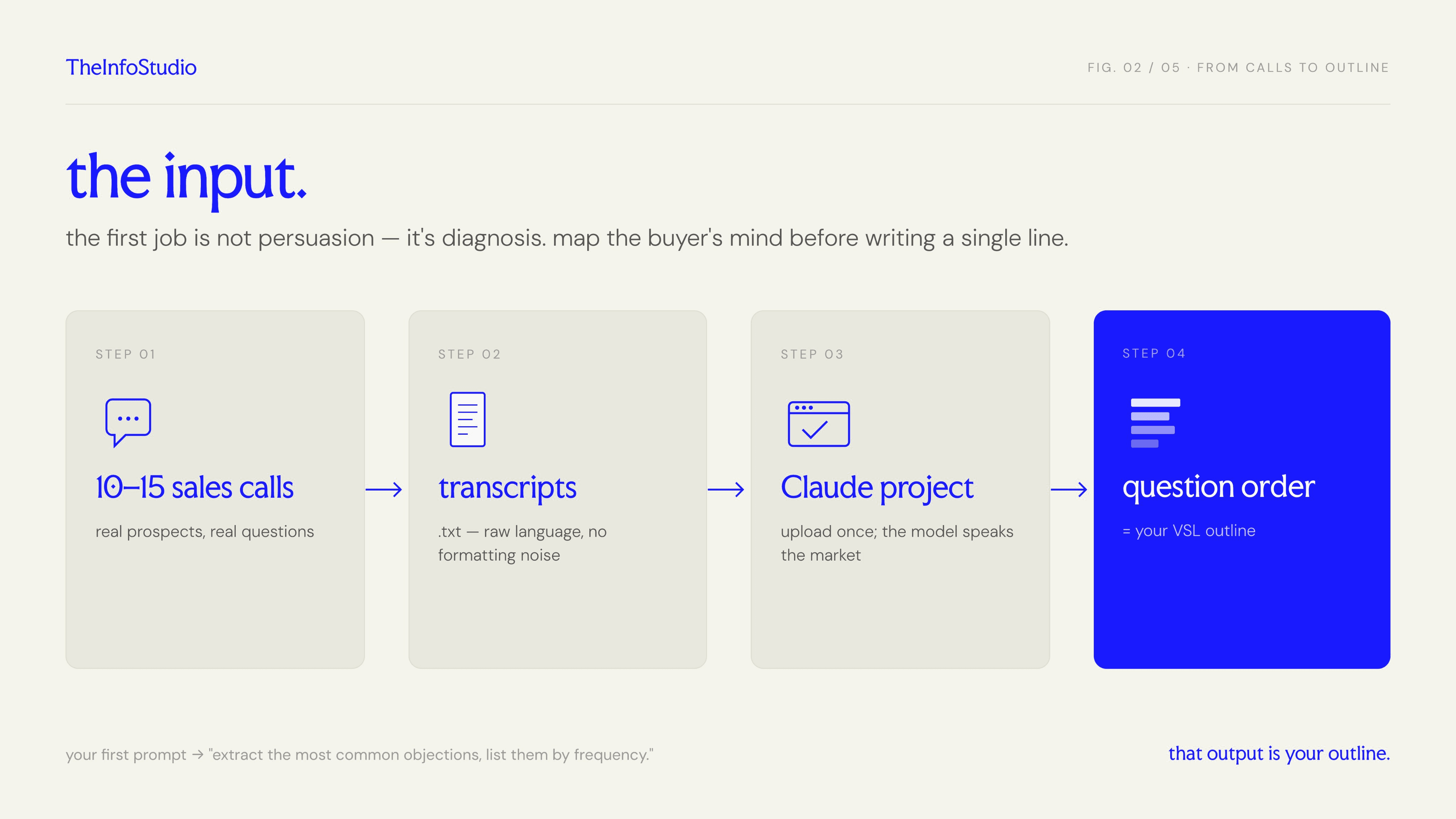
The fix: 10 to 15 real sales-call transcripts.
Actual calls from people who were interested in the offer — not testimonials, not a founder brain-dump. A sales call contains the entire market: what they ask first, what they’re sceptical about, what they’ve already tried, the words they use for the problem, and the proof they need.
Upload those transcripts into a Claude project (plain text is cleaner than PDF — you want raw language, not formatting noise). Then your first prompt isn’t “write the script.” It’s diagnosis: “What are the core value propositions, key points, pain points, and questions I need to address in this video?” Your second prompt builds the outline: “Extract the most common objections and questions, ranked in descending order of frequency.” That ranked list is your VSL outline — the table of contents, not the script.
The Sequence: Each Answer Creates the Next Question
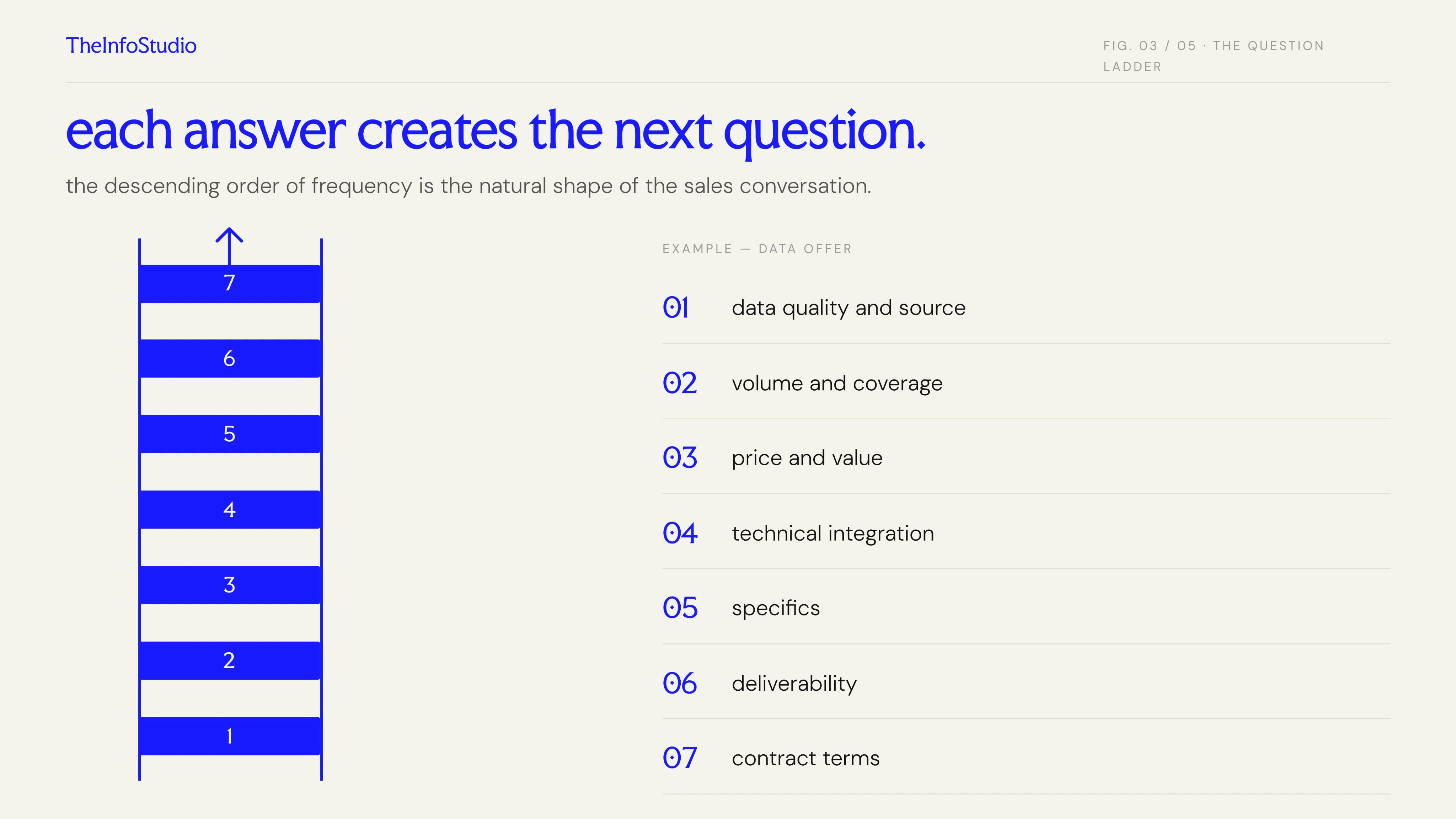
Descending order of frequency isn’t just a list — it’s the natural shape of the sales conversation. The most repeated question is usually the first mental barrier. The second is usually the barrier created by answering the first. Then the third, then the fourth.
Each answer creates the next logical question. Your VSL just anticipates them.
Bad VSLs feel jumpy because they’re organised around the creator’s ego: who we are, why we’re great, what we do, look at our testimonials, book a call. Meanwhile the prospect is thinking “okay, but what actually happens after I pay?” — and the video is showing a founder headshot.
The Structure: 11 Sections, One Conviction Sequence
Once you have the question order, the VSL becomes simple. Not easy — simple. Each section has exactly one job:
Hook (with a 90-second summary)
Credibility bridge
Problem and stakes
Failed solution
Mechanism reveal
Solution walkthrough
Proof
Objection handling
Offer
Risk reversal
Call to action
1. Hook: the summary and the open loop
Do two things in the first 60–90 seconds. First, a compact summary — treat it like you have to cover the entire VSL in a tweet: what it does, who it’s for, why it’s worth staying. Second, open a loop. Not “hey, my name is X and today I’m going to show you…” (dead on arrival). Try: “The reason your booked calls don’t close is because the selling starts 30 minutes too late.” Now they need to know what that means.
2. Credibility bridge: prove you understand the room
Credibility in a B2B VSL is pattern recognition, not a flex montage. Name the exact situation: “You have referrals coming in, a few outbound replies, maybe one paid campaign that booked calls but the quality was trash. So the problem isn’t zero demand — it’s inconsistent pipeline with no control over quality.” That lands harder than “we’ve helped hundreds of businesses scale.”
3. Problem and stakes: make the cost visible
The real problem isn’t “you need more calls.” It’s that you can’t forecast revenue, your sales team wastes time on low-intent calls, referrals make growth feel random, and you delay hiring because pipeline is unstable. B2B buyers care when the pain attaches to revenue, time, risk, or control.
4. Failed solution: explain why the old path didn’t work
This section builds trust because it proves you’re not pretending their previous attempts were stupid. If they tried Meta lead forms, explain why cheap leads created expensive sales calls. If they hired a media buyer, explain why traffic without pre-nurture makes the sales team carry the entire burden. Explain the mechanism failure — the viewer should feel understood, not corrected.
5. Mechanism reveal: name the actual reason it works
This is the most important section. Without a mechanism, your VSL is a pitch; with one, it becomes an explanation. “We install an ad-conversion engine that pre-nurtures cold traffic before the sales call, so the lead arrives already understanding the offer, the proof, and the next step” is a mechanism. “We run ads and build landing pages” is a deliverable list. Deliverables get price-shopped; mechanisms build trust.
6. Solution walkthrough: show the steps
Show the system without drowning them: the ad gets attention and pre-qualifies, the landing page explains the promise, the VSL builds conviction, the application filters quality, the confirmation page reinforces the call, and email + SMS nurture lifts show rate. Each piece exists because the previous piece creates a new problem — that’s what makes the funnel feel inevitable.
7. Proof: compound it, don’t repeat it
Four testimonials in a row is weak proof. Stronger: one client outcome, one screenshot, one before/after, one mechanism-specific result — then show how it happened. Case studies are table stakes now; mechanism depth is the proof.
8. Objection handling: place objections where they appear
Objections aren’t random — they appear in sequence. Don’t save them for the end. If you mention Meta ads, handle ad spend right there. If you mention applications, handle lead quality. The best objection handling feels like clarity, not defence.
9. Offer: make the next step obvious
By the time you reveal the offer, the viewer already understands the problem, the stakes, why old solutions failed, the mechanism, what’s included, and which risks are handled. So the offer isn’t a surprise — it’s the logical next step. No fake urgency, no 12 bonuses, no timer that resets on refresh.
10. Risk reversal
Address the one thing stopping them from clicking: “what if this doesn’t work?” Answer it directly with a guarantee, a refund policy, or a risk-sharing model. If you have a 60-day ROI guarantee, this is where you state it. If you don’t, name the protection you do offer.
11. Call to action: one action, one reason, no options
Tell them exactly what to do next. One step. The moment you say “you can book a call OR download the free guide OR check out our YouTube,” you’ve handed the decision back to someone who was already ready to act.
The Page, the Timing, and the Test
The VSL doesn’t live in isolation - it sits on a landing page that’s either helping or killing it. For B2B call funnels the setup that works is headline → VSL → application. No testimonial carousels below the video, no long FAQ, no “here’s what’s included” lists. When you add text around the video, prospects scroll and read instead of watching. Use a conversion-focused player (Wistia or Vidalytics, not YouTube or Vimeo), add chapter markers so viewers can self-qualify, and pick a thumbnail that shows something they actually care about.
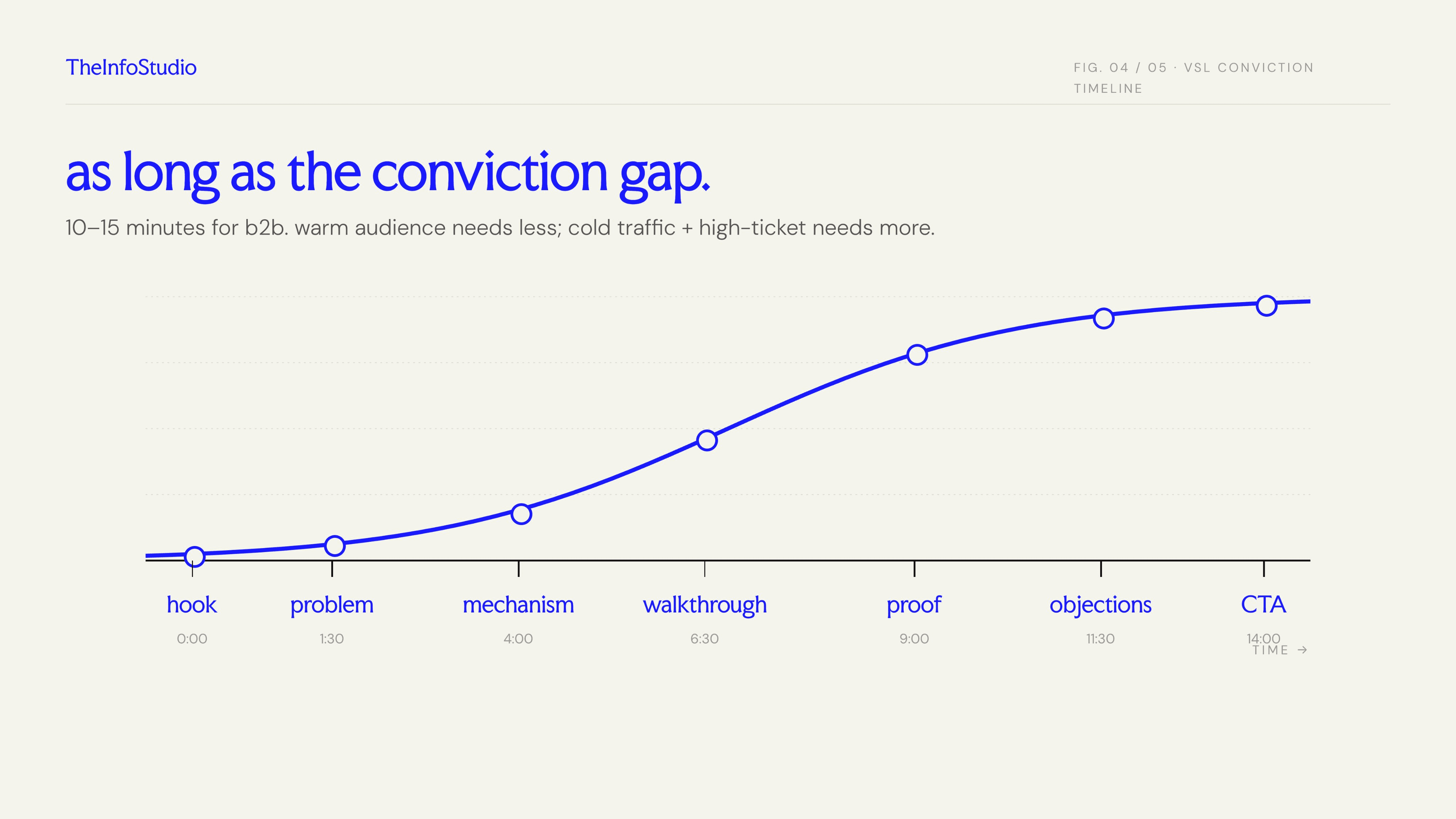
On length: 10–15 minutes is the standard B2B testing range. Your VSL should be as long as the conviction gap — warm audiences need less, cold traffic needs more. Track play rate (below 50% means the page or thumbnail is the problem, not the video) and engagement rate alongside watch time.
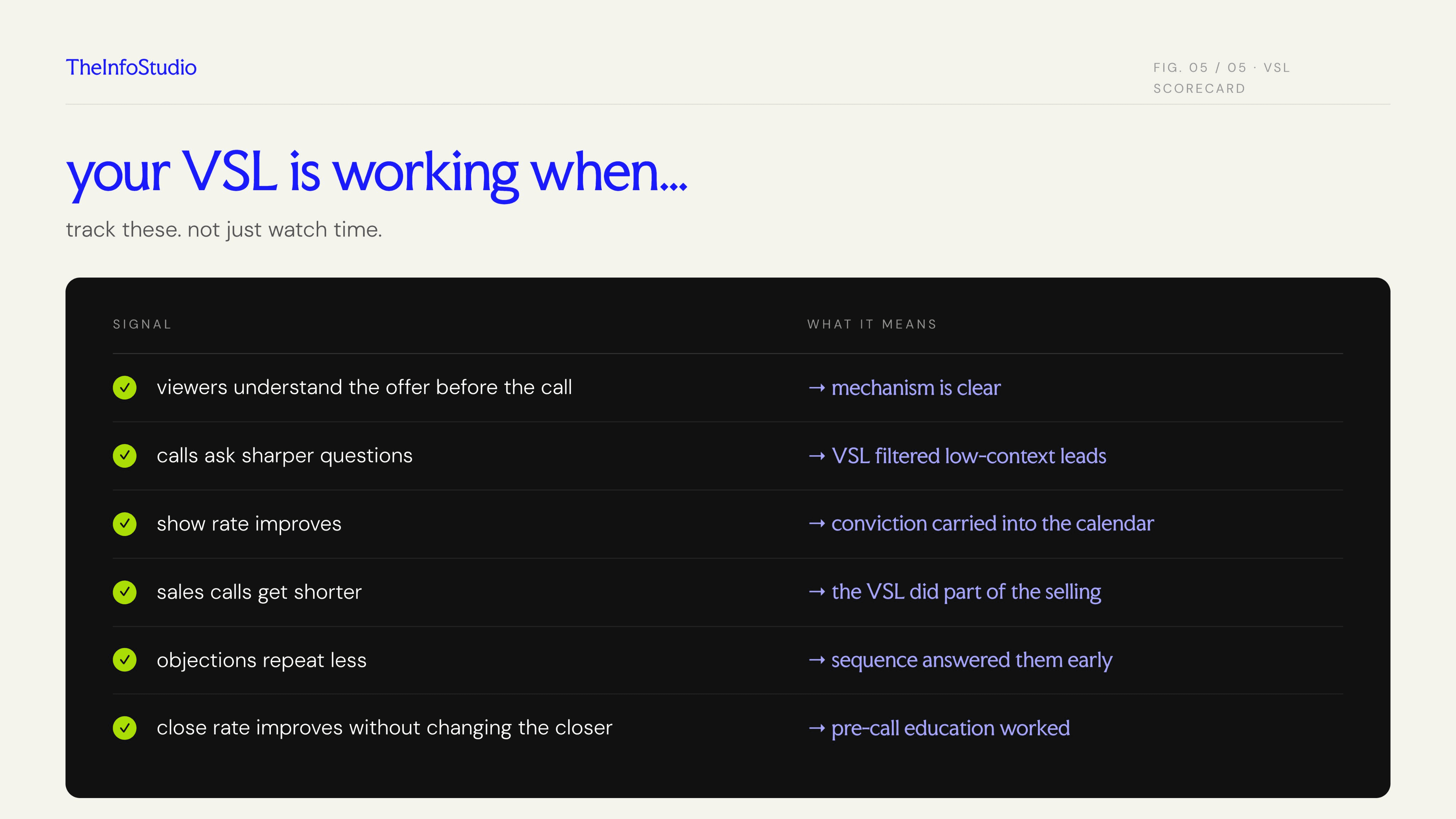
Then run the test. Watch your VSL and pause after every section, asking one question: what question in the prospect’s mind did this section answer? If you can’t answer that, the section is ego, filler, or decoration — cut it. Then ask what question this section creates next, because the next section should answer it. Keep going until the only question left is “what do I do next?” That’s when the CTA works — not because of magic words, but because the structure did its job.
This is the same logic behind a great landing page. If you’re sending cold traffic, read how the broader system fits together in our breakdown of the difference between a website and a conversion system.
Want a cold-traffic VSL funnel built around this structure? Book a call and we’ll map it to your offer.
Want this built for your offer?
We build done-for-you cold-traffic funnels for B2B agencies — landing page, VSL, ads, and nurture in 14 days.
Book a free call